
Two clear glass water pipes standing side by side on a display shelf can look identical at a glance yet differ dramatically in weight, durability, and lifespan. Understanding borosilicate glass wall thickness—specifically the structural jump between 5mm, 7mm, and 9mm tubing—helps you choose glassware that survives daily handling and cleaning.
Direct Answer: Borosilicate glass thickness measures the millimeter gauge of the outer tubing wall and directly determines impact resistance and weight. A 5mm wall offers balanced everyday durability and comfortable single-handed weight, 7mm glass adds substantial protection against sink taps and tabletop bumps, and 9mm heavy-wall glass provides maximum structural rigidity for stationary home setups where accidental tipping is a concern.
Why Scientific Borosilicate Glass Is the Industry Standard
Not all clear glass is formulated equally. Cheap novelty glassware is often blown from standard soda-lime glass—the same material used in disposable beverage bottles. Soda-lime glass has a high coefficient of thermal expansion, meaning it expands rapidly when exposed to heat and cracks easily from minor knocks.
Quality functional water pipes are crafted from 3.3 borosilicate glass, which incorporates boron trioxide into the silica melt. Originally engineered for laboratory beakers and industrial sight glasses, borosilicate offers low thermal expansion, high chemical inertness (meaning it never imparts metallic or plastic odors), and superior structural integrity when kiln-annealed properly.
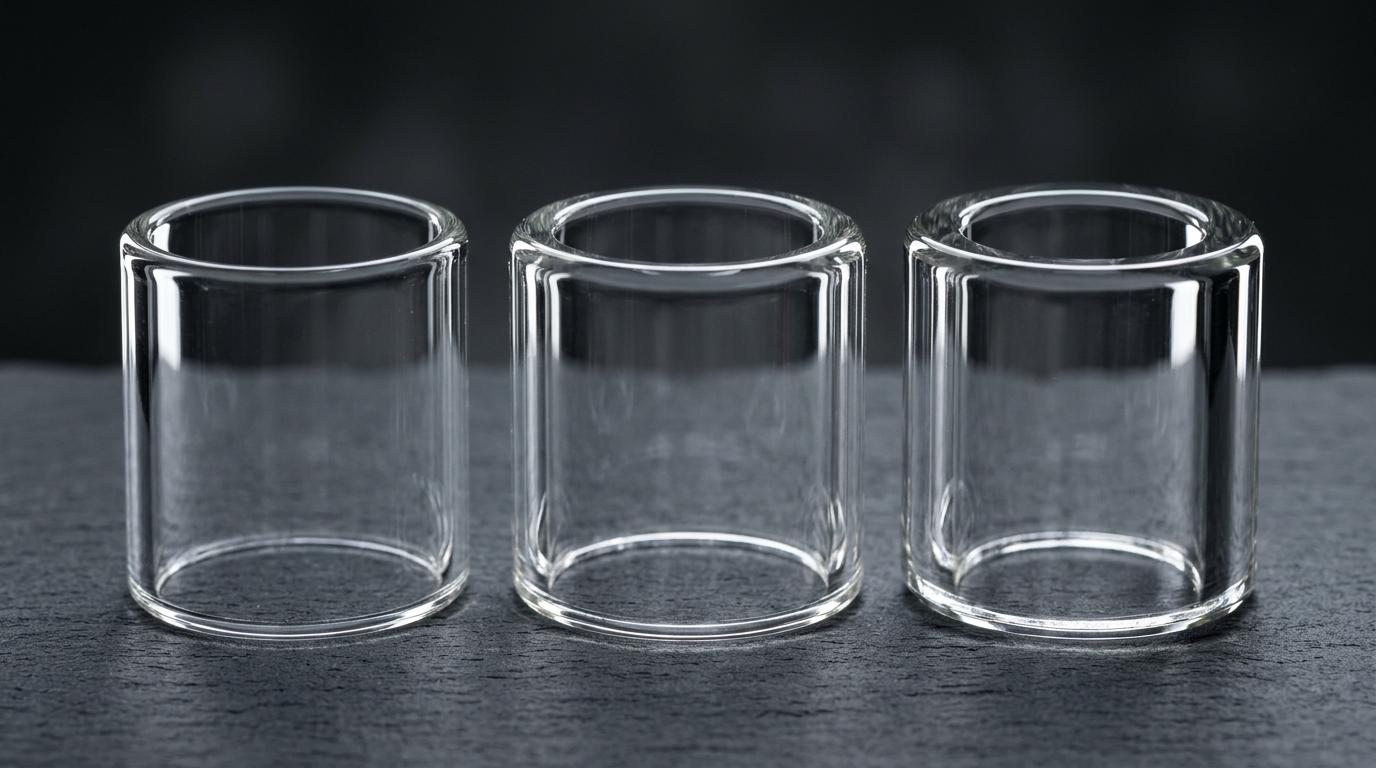
Comparing Wall Gauges: 5mm vs. 7mm vs. 9mm
1. 5mm Glass: The Balanced Daily Standard
Whereas budget imported glass often measures 2.5mm to 3.5mm (feeling hollow and fragile), 5mm borosilicate represents the entry threshold for dependable scientific glass. It provides solid resistance against routine tabletop setting while remaining light enough to hold comfortably in one hand during extended sessions.
2. 7mm Glass: Heavy-Duty Home Protection
Stepping up to 7mm wall tubing noticeably increases the heft of a 12-inch to 16-inch water pipe. This gauge is prized by adult buyers who clean their glassware frequently in kitchen or bathroom sinks, where accidental taps against a metal faucet are the leading cause of broken pieces.
3. 9mm Glass: Maximum Stationary Mass
At 9mm (over a third of an inch thick), the glass wall resembles heavy architectural tubing. A 9mm beaker base or straight tube can weigh between 3 and 5 pounds empty. While too heavy for travel, 9mm pieces offer a low center of gravity and exceptional resistance against coffee-table tip-overs.
Glass Thickness Comparison Matrix
| Wall Thickness | Weight Class | Impact Durability | Ergonomics & Grip | Ideal Use Case |
|---|---|---|---|---|
| 3mm – 4mm (Budget) | Featherweight | Low (Fragile against taps) | Very light | Occasional use with extreme care |
| 5mm (Standard) | Moderate (1.5 – 2.2 lbs) | Good (Handles routine care) | Balanced one-hand hold | Everyday home & Intricate Percs |
| 7mm (Heavy Wall) | Substantial (2.3 – 3.2 lbs) | High (Survives minor bumps) | Sturdy two-hand feel | Frequent sink cleaning & Group sessions |
| 9mm (Ultra Heavy) | Heavyweight (3.5 – 5.0 lbs) | Maximum (Thick outer armor) | Best rested on a tabletop | Stationary home centerpiece |
Beyond Millimeters: 3 Structural Weak Points to Inspect
Even a 9mm tube is only as strong as its thinnest weld. When evaluating glassware in a shop, inspect these three engineering checkpoints:
- The Beaker Corner Curve: When a glassblower flares a cylinder into a conical beaker base, the glass stretches thin at the bottom outer edge unless extra gather is used. Look for a thick, uniform base floor.
- The Ground Joint Weld: The 14mm or 18mm female joint where the downstem enters should have a smooth, thick “Maria” (a reinforced ring of glass) without air bubbles or hairline stress lines.
- Internal Percolator Arms: Even if the outer tube is 7mm or 9mm, internal tree arms or honeycomb discs are made from thinner tubing—handle multi-chamber pieces gently when shaking with salt.
Related Guides & Recommended Reading
- Building Your Collection: The Essentials for Every Smoker – Core glassware and maintenance tools for a well-rounded home setup.
- How to Choose the Right Size Bong for Your Needs – Match height and volume to your storage space and draw preference.
Frequently Asked Questions
Is 9mm glass unbreakable?
No glass is unbreakable. While 9mm borosilicate can survive minor tip-overs onto wood or carpet and accidental taps against a sink basin, dropping any glass pipe onto ceramic tile or concrete can still fracture the joint or base.
Why are intricate multi-percolator bongs usually 5mm instead of 9mm?
Fusing complex internal chambers (like stacked matrix cages or recycling loops) requires precise heat penetration in the lathe. A 5mm outer wall allows glassblowers to create clean, stress-free internal welds while keeping the finished pipe from becoming excessively top-heavy.
Notice: This educational guide is published strictly for adults aged 21 and older. All glassware described is intended solely for lawful use in accordance with local, state, and federal regulations.
Evaluating borosilicate wall gauge alongside joint reinforcement and base diameter ensures you invest in water filtration hardware suited to your home environment. Whether you prefer lightweight 5mm daily pieces or heavy 9mm tabletop beakers, feeling the weight balance in person makes the difference clear. As the publisher of this article and a multi-state retailer, Smoke City invites adult customers across Washington, Idaho, Montana, and New Mexico to inspect our scientific glass inventory firsthand. Visit the Smoke City Store Locations page to find your closest retail shop, or explore our Glass and Water Pipes category online to compare wall specifications. All glassware and accessories are sold exclusively for lawful adult use by customers aged 21 and older with valid government identification.