
Over time, stagnant water and dark tar buildup coat the inside of borosilicate water pipes, restricting airflow and tainting every draw with bitter residue. Knowing how to dissolve stubborn resin safely—without relying on abrasive industrial solvents or boiling water that causes thermal shock—keeps your glassware functioning smoothly and tasting clean.
Direct Answer: The most effective method to clean a dirty glass bong without harsh industrial chemicals combines 91% to 99% isopropyl alcohol with coarse sea salt as a gentle mechanical abrasive. For an alcohol-free household alternative, warm distilled white vinegar paired with baking soda and citrus dish soap lifts light mineral scale and resin when agitated and rinsed thoroughly with warm water.
What You Need Before You Start
Before placing wet glass inside a hard porcelain or stainless-steel sink, gather these basic household tools to prevent accidental slips and glass fractures:
- Primary Solvent Option: 91% or 99% Isopropyl Alcohol (or Distilled White Vinegar + Lemon Juice for an alcohol-free method).
- Gentle Abrasive: Coarse kosher salt, coarse sea salt, or baking soda (coarse grains scrub inner walls because salt does not dissolve in alcohol).
- Sealing Tools: Silicone tapered bong plugs or stretchable silicone caps (much safer and less messy than covering openings with bare palms).
- Detail Tools: Pipe cleaners, cotton swabs, and a padded rubber sink mat or folded hand towel laid inside the sink basin.
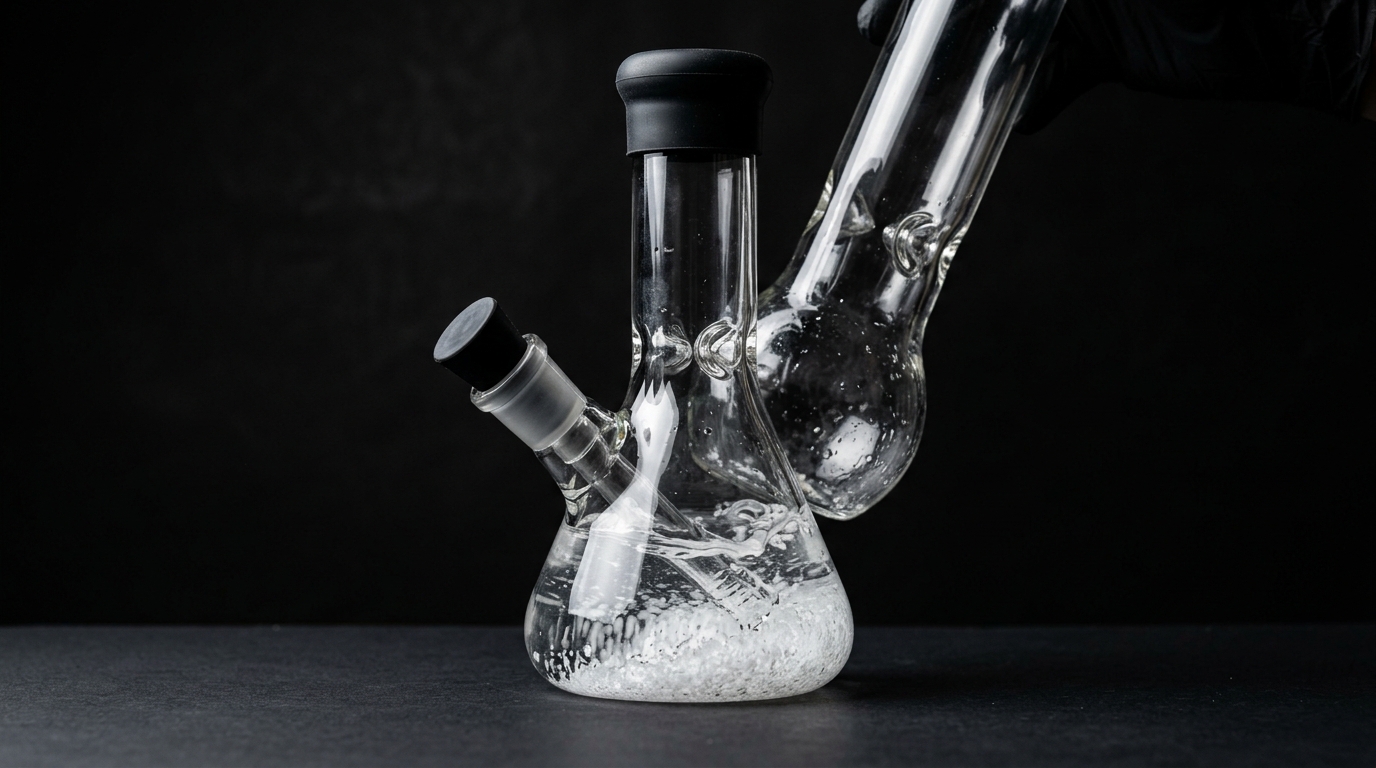
Method 1: The Gold Standard (Isopropyl Alcohol + Coarse Salt)
- Disassemble & Warm Rinse: Remove the bowl slide and diffused downstem. Place each small part into separate resealable plastic bags so glass-on-glass contact cannot chip the ground joints. Flush the main pipe body with warm (never boiling) tap water for 60 seconds to soften surface residue.
- Add Coarse Salt: Pour 2 to 3 tablespoons of coarse sea salt or kosher salt through the mouthpiece and downstem joint.
- Add Isopropyl Alcohol: Pour enough 91%+ isopropyl alcohol to submerge the lower water line and coat any upper percolators (roughly one-half to one cup). Seal the bowl and downstem bags with alcohol and a pinch of salt as well.
- Plug & Agitate: Insert silicone cleaning plugs firmly into the joint and mouthpiece. Hold the pipe with two hands—one gripping the neck and one supporting the base—and shake for 2 to 3 minutes so the salt slurry scrubs the waterline ring.
- Triple Warm Water Flush: Empty the dirty solution and rinse the chamber thoroughly with warm tap water at least three times until zero alcohol odor remains.
Method 2: Alcohol-Free Cleaning (Vinegar, Baking Soda & Citrus)
If you prefer not to use rubbing alcohol, household acetic acid (distilled white vinegar) and sodium bicarbonate create a foaming mechanical lift that loosens light organic oils and hard-water calcium rings:
- Add 2 tablespoons of baking soda into the rinsed glass chamber.
- Slowly pour warm distilled white vinegar and a teaspoon of fresh lemon juice into the neck; allow the effervescent foam to rise through the percolator slits and soak for 30 minutes.
- Scrub accessible areas with a soft nylon bottle brush, add a drop of degreasing dish soap, agitate, and rinse thoroughly with warm water.
Critical Safety Warnings: What Never to Do
- Never Pour Boiling Water Into Cold Glass: Even laboratory-grade borosilicate can crack along internal percolator welds if subjected to rapid extreme temperature swings (thermal shock). Always use comfortable warm tap water.
- Never Use Industrial Paint Thinner, Acetone on Decals, or Bleach: Acetone strips baked-on glass logos and paint, while bleach and ammonia leave toxic fumes inside enclosed chambers.
- Keep Isopropyl Alcohol Away from Open Flames: High-proof alcohol vapors are highly flammable; always work in a ventilated sink area away from torches or lighters.
Related Guides & Recommended Reading
- How to Maintain a Clean and Odor-Free Smoking Area – Practical ventilation and storage habits that keep indoor rooms fresh.
- Beaker Base vs. Straight Tube Bongs: Which Hits Smoother? – Compare how pipe silhouette impacts daily cleaning and water capacity.
Frequently Asked Questions
How often should I change my bong water and deep-clean the glass?
Dump and replace stagnant water after every daily use. Stagnant water develops biofilm and mold spores within 24 to 48 hours. Performing a quick warm-water rinse daily and an alcohol-and-salt shake once a week prevents hardened tar buildup.
How do I remove cloudy white hard-water stains from clear glass?
White cloudiness (“glass bloom”) is caused by calcium and magnesium minerals in tap water—not resin. Soak the affected chamber in straight distilled white vinegar or a teaspoon of food-grade citric acid dissolved in warm water for 2 hours, then rinse with distilled water.
Notice: This care and maintenance article is intended solely for adults aged 21 and older. Always store cleaning solvents out of reach of children and pets.
Maintaining clean borosilicate glassware preserves unobstructed water percolation, prevents cloudy mineral staining, and eliminates stale water odors between sessions. Whether you need silicone cleaning plugs, bendable bristle brushes, or replacement diffused downstems and bowl slides, our retail specialists can help you match the exact joint size for your setup. As the publisher of this care guide and an adult retail store, Smoke City stocks maintenance accessories across Washington, Idaho, Montana, and New Mexico. Visit the Smoke City Store Locations page to speak with a specialist near you, or browse our Glass and Water Pipes category online to explore replacement parts and glassware. All products are intended strictly for lawful use by adults aged 21 and older with valid photo identification.